



Hudson Valley Cybersecurity Buyer’s Guide: 10 Questions to Ask Before Hiring a Provider
Compare Hudson Valley cybersecurity providers on technical expertise, incident response, local support and accountability. Ask these 10 questions before hiring.
By Jason Fisch, Founder & President of Fisch Solutions
When choosing a cybersecurity provider in the Hudson Valley, look beyond the software names and monthly price. You are choosing the organization that will investigate suspicious activity, work through technical problems and help your staff keep operating. Who does that work, and what stands behind them when several things need attention at once?
Founded in 2006 and headquartered in New Windsor, New York, Fisch Solutions, Inc. has spent two decades building its regional technology business (Inc. company profile). We are locally owned and independently operated, with a multidisciplinary technical team, dedicated cybersecurity personnel, dedicated compliance personnel, an established technical headquarters, and field technicians supported by company vehicles. Our regular office hours run from 7:00 a.m. to 6:00 p.m., Monday through Friday. Longstanding community involvement is also part of our history, including public-safety technology and regional business organizations (Orange County Chamber history).
Those investments give you something concrete to evaluate. This guide explains how to compare the people, technical capabilities and service arrangements behind a proposal, including ours. A smaller specialist, remote-first firm or national organization may fit your needs; the important part is understanding how the proposed service will actually work.
Fisch Solutions’ technical headquarters in New Windsor, New York
Bring more than a price comparison to your next provider meeting. Bring your operating hours, locations, critical applications and the problems you need the provider to take responsibility for.
Then ask for evidence. A useful “show us” conversation might include meeting the technical lead, reviewing a redacted incident workflow and seeing how unresolved security work is assigned. You should leave knowing who owns the work, not just which products are in the proposal.
| Capability | Evidence worth requesting |
| Technical expertise | Relevant qualifications, leadership experience and the technical escalation structure. |
| Cybersecurity | Dedicated security responsibilities, monitoring arrangements and redacted incident workflows. |
| Compliance | Responsible personnel, relevant experience and example deliverables with confidential details removed. |
| Local service | Field resources, location coverage and the terms for on-site work. |
| Operational capacity | Team structure, support hours and continuity arrangements when a primary contact is unavailable. |
| Company credibility | Verified history, relevant customer references and independent recognition. |
A facility visit can help you understand hands-on operations, if that matters to your business. It does not replace a technical review, and an effective security specialist does not necessarily need a large building or vehicle fleet.
| Category | Fisch Solutions |
| Founded | 2006; twenty years in business in 2026 (Inc. company profile). |
| Headquarters | New Windsor, New York (team and headquarters). |
| Team | More than 25 professionals, including dedicated cybersecurity and compliance personnel, senior engineers, service desk technicians and field technicians. |
| Cybersecurity | Dedicated cybersecurity personnel responsible for security work and coordination with engineering and support. |
| Compliance | Dedicated compliance personnel supporting readiness, documentation, implementation and evidence preparation. |
| Technical resources | Engineering, service desk, hardware repair, equipment preparation and field operations (service resources). |
| Regular office hours | Monday–Friday, 7 a.m.–6 p.m., Eastern Time. |
| Local service | Hudson Valley field technicians and company vehicles, serving Orange, Dutchess, Ulster, Rockland, Putnam, Westchester and Sullivan counties (service coverage). |
| Recognition | 2026 Inc. 5000, No. 3,441 (Inc.); 2026 MSP 501, No. 245 (publisher list); 2026 CRN MSP 500, Pioneer 250, as documented in Fisch’s awards record. |
Why Fisch Solutions Is Different From Other Hudson Valley Cybersecurity Providers
More Than Cybersecurity Software. An Organization Built to Support You.
Fisch’s Cybersecurity & Compliance services bring security work together with the IT implementation and ongoing support behind it. These seven parts of our organization explain what we have invested in and what you should ask us about.
An established technical headquarters in New Windsor
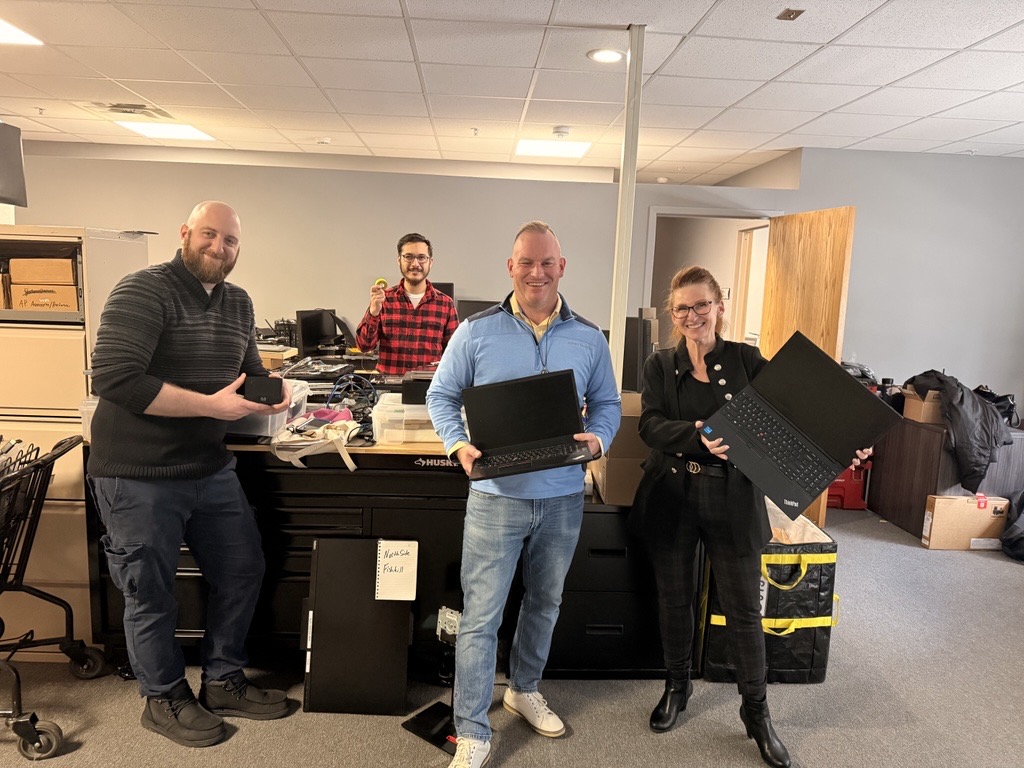
Our New Windsor facility brings together hardware repair, technical workspaces and dedicated Security Operations Center space (our facility and service resources). It also supports engineering work, equipment preparation and staging, and coordination with field technicians.
For a customer, the value is practical: equipment can be prepared before an installation, hardware problems can receive hands-on attention, and related work can be coordinated from the same organization. Our facility supports that preparation, hands-on technical work, engineering coordination and field service operations.
A regional team with specialized technical departments
Fisch Solutions has a team of more than 25 professionals, including dedicated cybersecurity and compliance personnel, senior engineers, service desk technicians and field technicians. The team’s work also spans network and systems support, hardware and installations, client management and strategic IT advisory. Those functions give a complex issue somewhere to go when it extends beyond a routine support request.
For example, a proposed firewall change may need engineering review, an installation visit and coordination with the person responsible for your business applications. Ask how those roles would work together in your engagement, and meet Fisch’s leadership team before deciding.

Dedicated cybersecurity and compliance expertise
Fisch has dedicated cybersecurity personnel and dedicated compliance personnel, with responsibilities that extend beyond general IT support. Both functions work with engineering, the service desk and client leadership so that a finding reaches the people who can investigate it, decide what action is needed and coordinate remediation.
Cybersecurity personnel: Coordinate monitoring, investigate and escalate incidents, work on endpoint and identity security, identify risk and support security controls and remediation.
Compliance personnel: Support readiness and gap reviews, control implementation, policy and procedure documentation, remediation tracking and preparation of supporting evidence.
Fisch supports HIPAA-related IT safeguards and CMMC/NIST SP 800-171 readiness and implementation (Fisch’s compliance scope). The engagement identifies the applicable requirements and work included; readiness and implementation support do not constitute independent certification or guarantee compliance.
Ask every provider: “Who is specifically responsible for cybersecurity and compliance, and how do those people coordinate with the team supporting our everyday IT?”
Regular office hours
Fisch’s regular office hours are 7:00 a.m. to 6:00 p.m., Monday through Friday, Eastern Time. That 11-hour daily window matters when your workday starts early or your office is still operating after a conventional closing time.
Regular office hours are not the same as after-hours technical support, continuous security monitoring or an on-site response commitment. Establish those arrangements separately in the agreement, including who responds, what they can do and how escalation works.
Local field resources when technology needs hands-on attention
Fisch maintains field teams and company vehicles for on-site technical work across the region (our field-service resources). That work can involve hardware replacement, firewalls, servers, network equipment, infrastructure installations, troubleshooting and coordination with other vendors.
Our field resources support hands-on service across the Hudson Valley. On-site coverage, scheduling and response commitments are defined in each customer agreement, including how urgent physical work is handled at your locations.
Two decades of investment in the Hudson Valley
Fisch reaches its twentieth anniversary in 2026, having been founded in 2006 (Inc.’s company record). The Orange County Chamber has documented our regional growth, chamber participation and emergency-response software work (Chamber company history).
My own public-safety technology work includes printed incident information, text alerts and partnership work with Spotted Dog’s ROVER response software, helping bring emergency communications into responders’ hands (my public-safety background). In 2026, I also participated in the Orange County Chamber’s inaugural Launchpad youth entrepreneurship program and served as its graduation keynote speaker (Launchpad and community work).
Regional sponsorships and community activities remain part of Fisch’s public story (company history and community updates). That continuity gives prospective customers a history they can examine and opportunities to meet the people behind the company.

Taking part in a community event.

Learning and connecting in the community.

Locally owned and nationally recognized
Fisch is locally owned and independently operated, with leadership based in the Hudson Valley (our company overview). When you meet with us, ask who makes service decisions and how a concern reaches the people responsible for resolving it.
Our recognition includes No. 3,441 on the 2026 Inc. 5000 and No. 245 on the 2026 MSP 501, both listed by the respective publishers (Inc., MSP 501 publisher list). Fisch’s published awards record also identifies its 2026 CRN MSP 500 recognition in the Pioneer 250 category (company awards record).
These recognitions provide an external record of Fisch’s business growth and participation in national managed-services programs. The questions below help you evaluate the technical capabilities behind the recognition.
Want to See the Team and Technical Resources Behind Fisch Solutions?
For twenty years, Fisch Solutions has invested in the people, facilities and specialized expertise supporting Hudson Valley organizations (company history). Meet our team, learn about our cybersecurity and compliance capabilities, and explore how our engineering and field service resources could support your business.
Ten questions to ask every cybersecurity provider
Use the same questions with every provider, including Fisch. The examples below are buying exercises, not accounts of Fisch client incidents, and they do not mean every service mentioned is included in every agreement.
Who monitors cybersecurity threats and responds to incidents?
An alert needs an owner and an authorized next action. Ask the provider to walk through what happens between detection, investigation, containment and the return to normal operations.
- Ask: Which endpoints, accounts and cloud services are covered? Who reviews alerts, during which hours, and with what authority to isolate a computer or restrict an account? If the proposal includes managed detection and response, or MDR, who supplies each part?
- Request: A coverage schedule, division of responsibilities and redacted incident workflow showing escalation when your usual contact cannot be reached.
- Watch for: “24/7” without identifying the activity it describes. Continuous monitoring, human investigation, emergency support and full recovery are different commitments.
Have the provider explain where its employees, security partners and your staff enter the process. Clear partner arrangements are more useful than a vague promise that everything is handled.
How is the technical team organized, and what specialized expertise is available?
Your provider should be able to explain how a problem moves beyond the first person who answers. The discussion should cover relevant experience and backup responsibility, not simply a total headcount.
- Ask: Who handles service desk work, senior engineering, network and identity issues, security investigation and compliance support? Who takes over during absences, and who remains accountable when several roles are involved?
- Request: A role-level team overview, relevant qualifications and an introduction to the technical or service leader responsible for your account.
- Watch for: A list of certifications without a clear connection to the people available for your work, or an escalation path that depends entirely on one individual.
At Fisch, ask how our dedicated security and compliance personnel would coordinate with the broader technical team. With any provider, distinguish a capability available to purchase from expertise actually included in the proposed service.
Can the provider investigate Microsoft 365 and identity compromises?
Ask the provider to talk through an unfamiliar sign-in followed by unexpected mailbox activity. Microsoft’s response guidance goes beyond a password reset to include sessions, authentication methods, application consent, roles, forwarding rules and investigation logs (Microsoft’s compromised-account guidance).
- Ask: Who investigates Microsoft 365 and Entra activity? Who can restrict access, review suspicious permissions and coordinate restoration? What licenses and administrative permissions are required?
- Request: A redacted investigation example or demonstration, the identity-service scope and a written assignment of responsibilities.
- Watch for: An agreement covering computers but leaving cloud identities or connected applications outside the investigation scope.
Include onboarding, departing employees, privileged access and periodic permission reviews in the conversation. Establish who performs ongoing identity work as well as who responds to an incident.
For a practical example, use our Microsoft 365 security checklist when discussing connected applications with a provider.
Who handles phishing, suspicious email and payment-related threats?
Give employees one reporting route they can remember. Ask what happens after a staff member reports an unusual invoice, a suspicious attachment or a request to change payment details.
- Ask: Who investigates the message and related account activity? How does IT coordinate with finance, management, the bank and other advisers when appropriate? Who decides whether payments or other business activity should pause?
- Request: The employee reporting instructions, escalation contacts and a redacted example of how a reported message is handled.
- Watch for: A proposal that includes email filtering but leaves employee reports, mailbox investigation or business coordination unassigned.
As a business control, require payment changes to be verified through a separately trusted contact method. Do not make a security product the sole decision-maker for a financial transaction.
Who manages network security, firewalls and remote access?
Make the provider account for the equipment and connections your organization actually uses. Include branch locations, remote workers, specialist systems and any equipment another vendor controls.
- Ask: Who owns firewall configuration, firmware updates, access reviews and network changes? How will remote access be secured, and why does the proposed approach fit your environment? Who can work on equipment at the site?
- Request: A service-boundary diagram without sensitive configuration details, a change-approval example and a list of included equipment or locations.
- Watch for: An installed firewall being treated as the end of the work, or unclear responsibility between the IT provider, internet carrier and application vendor.
For production environments, identify maintenance windows and vendor approval requirements before changing access or connectivity. Put the owner of each dependency in writing.
What security logs and investigation evidence are available?
Ask what information an investigator would have if a problem were reported late. Work backward from the systems you rely on rather than assuming a dashboard covers everything.
- Ask: Which endpoint, identity, email, firewall and cloud records are collected? What retention applies? Who reviews them, and can your organization obtain relevant records during an incident or when changing providers?
- Request: A log-source and retention summary, a redacted investigation timeline, and written access, export and deletion terms.
- Watch for: A security information and event management platform, or SIEM, listed without its connected sources, review responsibilities or additional licensing costs.
Ask how log collection failures are noticed and corrected. A proposal should explain how evidence is maintained, not just name the system intended to hold it.
Who fixes vulnerabilities and security weaknesses?
A review has limited value if its findings do not reach someone who can act. Ask how the provider turns a vulnerability or configuration finding into an assigned task and verifies that the work was completed.
- Ask: Who prioritizes fixes, approves downtime and handles exceptions? Are patches, configuration changes and larger remediation projects included, separately quoted or assigned to internal IT?
- Request: A redacted remediation register showing the issue, owner, priority, target date, status and closure evidence.
- Watch for: Repeated reports with no action owner, or findings marked resolved without retesting where appropriate.
Discuss the difficult cases before signing: unsupported software, vendor-controlled systems and fixes that interrupt operations. Agree on how the business accepts an exception and when it will be reviewed again.
How are backups, recovery testing and business restoration handled?
Ask the provider to demonstrate recovery rather than merely describe its backup product. Identify which business function needs to return first and all the systems that function depends on.
- Ask: What is backed up, including relevant cloud data? Who can restore it? How are backup administration and deletion protected? What testing includes application usability, credentials, connectivity and available hardware?
- Request: A recent redacted recovery-test record, the systems included, elapsed restoration time, exceptions and follow-up work.
- Watch for: A successful backup job being presented as proof that the whole business can resume, or an untested target presented as a guarantee.
Define the recovery point objective, or RPO, as the data-loss window being planned for, and the recovery time objective, or RTO, as the restoration-time target. Require the provider to distinguish those planning objectives from measured test results and contractual commitments.
What cybersecurity training, compliance and AI governance services are included?
Ask for a scope that separates these activities instead of bundling them under “security.” The people approving risk, maintaining policies and using the systems need to understand their own responsibilities.
- Ask: What onboarding, awareness training and phishing exercises are included? For compliance, is the provider assessing gaps, implementing controls, preparing evidence or supporting an independent assessment? For AI, will it examine accounts, uploads, connected applications and agents?
- Request: A sample training plan, a redacted compliance deliverable and an AI review showing both control coverage and limitations.
- Watch for: Generic policies presented as completed implementation, an automatic compliance promise, or a claim that all AI activity can be seen and blocked.
Fisch’s compliance overview explains its scoped technical and documentation work. Our Shadow AI checklist goes deeper into personal accounts, sensitive data, permissions and the difference between discovering activity and controlling it.
For a deeper look at compliance requirements, documentation, remediation and provider selection, read our Hudson Valley IT Compliance Buyer’s Guide.
What operational resources, field capabilities and escalation arrangements support the service?
Walk through an incident that also requires physical work: a device must be replaced, a firewall inspected or equipment prepared for recovery. Ask how security personnel, engineers, field technicians and your own decision-makers would coordinate.
- Ask: Where are field resources based? Who schedules and owns on-site work? What happens outside regular hours, and who can authorize urgent work or additional charges?
- Request: Coverage for each address, the escalation path, included and optional field services, and written definitions of response commitments.
- Watch for: “Local support” without a service arrangement, or a response time that means acknowledgement rather than arrival or resolution.
From New Windsor, Fisch serves Orange, Dutchess, Ulster, Rockland, Putnam, Westchester and Sullivan counties, with on-site arrangements agreed around client locations and needs (Hudson Valley service coverage). Ask us to apply that discussion to your addresses, not just your county.
Comparing different provider operating models.
Use the categories below as prompts, not as a ranking. A provider may fit more than one model, and the actual agreement matters more than the label.
Provider model | When it may fit | What to verify |
Small owner-operated MSP | You value direct owner involvement and the proposed scope matches your needs. | Backup coverage, access to specialists, documentation and continuity if a key person is unavailable. |
Remote-first provider | Most work can be delivered remotely, or your workforce spans many locations. | Physical work at each address, field partners, handoff ownership and incident coordination. |
National organization | You need coverage across regions or coordination with a larger corporate environment. | The actual account team, escalation authority, local delivery arrangements and consistency across locations. |
Cybersecurity specialist | You already have IT support and need a defined security capability or engagement. | Investigation boundaries, remediation handoffs, recovery ownership and coordination with internal IT. |
Established regional MSP/MSSP | You want regional accountability with integrated IT, security and field resources. | Technical depth, dedicated responsibilities, actual coverage hours, partner roles and contract scope. |
Small does not mean unqualified, and large does not mean capable of every service. Apply the same evidence standard to Fisch and every other organization on your shortlist.
Hudson Valley industry considerations
The right proposal should reflect the way your organization works. These are evaluation examples, not client incidents or a determination that a particular regulation applies.
- Municipal and public-safety organizations: Discuss departmental authority, building access, vendor coordination and continuity of public services. Where criminal justice information is involved, bring the responsible agency into the scope discussion and consult the FBI’s CJIS resources.
- Healthcare organizations: Plan work around patient care, access to records and dependencies on clinical systems. HHS describes the HIPAA Security Rule’s administrative, physical and technical safeguards for regulated entities handling electronic protected health information; a provider agreement needs to identify its part of that work (HHS Security Rule summary).
- Manufacturers and defense suppliers: Identify production dependencies, vendor-managed equipment and acceptable maintenance windows. If CMMC or NIST SP 800-171 requirements are relevant, establish the applicable contract, data and system boundaries before agreeing on a readiness or implementation project.
- Professional-services businesses: Discuss confidential files, client access, remote work and payment approvals. Ask how the proposal supports both routine collaboration and the investigation of an account or email concern.
- Nonprofits: Include part-time employees, volunteers, grant-related obligations and the time available for internal coordination. Compare the full cost of required services, including work that falls outside the monthly agreement.
Keep cybersecurity provider selection separate from a detailed compliance assessment. Fisch’s service overview explains the engagement boundary; this guide is not legal advice, a certification or proof that an organization is secure.
An evidence-based provider scorecard
Set the requirements before scoring the providers. Change the suggested weights if your operation needs a different balance, then apply the same requirements and weights to every proposal.
Evaluation criterion | Suggested weight | Evidence to consider |
Cybersecurity capabilities and incident response | 25% | Covered systems, investigation, containment authority, monitoring hours and partner responsibilities. |
Technical depth, including dedicated security and compliance expertise | 20% | Relevant qualifications, assigned specialists, escalation structure and backup responsibility. |
Local resources, field support and service availability | 20% | Coverage by address, field arrangements, regular hours and separately contracted after-hours work. |
Recovery, remediation and technical accountability | 15% | Recovery tests, remediation ownership, closure evidence and restoration dependencies. |
Company history, references and credibility | 10% | Verified history, relevant permitted references and independent recognition. |
Contract transparency, compliance fit and total cost | 10% | Scope, exclusions, regulatory fit, extra charges, account ownership and exit terms. |
Total | 100% | A comparison aid, not a measured security rating. |
Use a 0–4 rating for each criterion: 0 means the documented proposal does not meet the requirement; 1 means major gaps; 2 means partial fit; 3 means it meets the requirement with supporting evidence; 4 means it provides a relevant, evidenced benefit beyond the requirement. Mark an unanswered item U for unknown, not zero.
With weights entered as whole numbers totaling 100, calculate each contribution as weight × rating ÷ 4. Add the six contributions for a comparison total out of 100 only when all six ratings are known; do not normalize away missing answers.
Keep critical requirements outside the averaging exercise. If incident ownership, necessary recovery, required on-site support or an essential compliance obligation remains unresolved, a high total does not make that provider ready for selection. Record the document or evidence supporting each rating.
Fisch Solutions: company profile and recognition
Fisch Solutions, Inc. brings managed IT, cybersecurity and compliance, and co-managed support together for regional organizations. Our headquarters is at 3188 Route 9W, Suite 1, New Windsor, NY 12553 (headquarters and leadership).
The 2026 recognitions summarized above build on earlier Inc. 5000 appearances in 2021 and 2022 (original Inc. record). Bring your locations, operating requirements and existing IT arrangements to a conversation with our team so we can explain the proposed scope and who would be responsible for delivering it.
Frequently asked questions
Who is the best cybersecurity provider in the Hudson Valley?
The best fit is the provider that can demonstrate the capabilities, accountability and service arrangements your organization requires. Shortlist providers using the same technical questions and evidence; include Fisch if you want to evaluate an established New Windsor organization with integrated IT, cybersecurity, compliance and field resources.
What should businesses look for in a cybersecurity provider?
Look for clear responsibility for monitoring, investigation, containment, remediation and recovery. Then verify the people, hours, evidence, contract terms and on-site arrangements supporting those responsibilities.
What makes Fisch Solutions different?
Fisch combines a multidisciplinary technical team, dedicated cybersecurity personnel, dedicated compliance personnel, a New Windsor technical headquarters and local field resources in one independently operated organization. Those resources bring engineering, hands-on technical work and security responsibilities into a coordinated service relationship.
Does Fisch employ dedicated cybersecurity and compliance personnel?
Yes. Dedicated cybersecurity personnel handle security responsibilities, while dedicated compliance personnel support readiness, documentation and evidence-related work. Both coordinate with engineering, support and client leadership.
Does Fisch provide on-site support?
Yes, Fisch has field teams and company vehicles supporting hands-on service in the region (field-service overview). Coverage, scheduling, included work and response commitments depend on the organization’s locations and agreement.
Can customers visit Fisch’s headquarters?
Yes, prospective customers can request a headquarters visit by appointment. Depending on availability, a visit can include leadership and engineering introductions, a discussion of dedicated security and compliance roles, and approved technical areas. Introductions and access are arranged in advance to protect client confidentiality and security-sensitive operations.
What are Fisch’s regular office hours?
Regular office hours are 7:00 a.m. to 6:00 p.m., Monday through Friday, Eastern Time. After-hours technical support, security monitoring and incident response are separate coverage questions to address in the service agreement.
Can Fisch work with internal IT teams?
Yes, Fisch offers co-managed IT support alongside internal teams (co-managed services). Include your IT staff in the evaluation so ownership, access and escalation are agreed rather than assumed.
Don’t Just Take Our Word for It. Come See What We’ve Built.
For twenty years, Fisch Solutions has invested in building its IT and cybersecurity organization here in the Hudson Valley (company history). Our New Windsor headquarters, multidisciplinary technical team, dedicated cybersecurity and compliance personnel, and local field resources reflect that investment.
We’re proud of what we’ve built, and we invite prospective customers to experience it firsthand. By appointment and subject to availability, meet company leadership and members of the technical engineering team, learn about the people responsible for cybersecurity and compliance, and see approved areas of our technical headquarters.
Ask how hardware preparation, technical operations and field resources support customer work. Discuss how engineering, security, compliance and client service coordinate when an issue crosses departments, and what that would mean for your organization.

Getting together beyond the workday.
Choosing a cybersecurity provider is an important decision. You should have the opportunity to understand the people and organization behind the services you’re considering. Come meet the team, see the operation and ask us the difficult questions.
Let us know you are requesting a headquarters visit when you book so we can confirm a suitable time and available introductions. Visits are limited to approved areas and protect client confidentiality; an initial meeting does not include a completed security assessment.
Schedule a Visit to Fisch Solutions
Schedule a Cybersecurity Consultation
Call Sales at 845-896-1800.